"In wilderness liesthe preservation of our world.“
When we preserve wilderness, we are protecting not only nature but, above all, our own foundation for life and that of future generations.
What we have achieved so far by the end of 2025:
0m² of forest purchased, of which …
0m² already under long-term protection through …
0individual donations.
0tonnes of sequestered CO₂
0trees planted in the "Mein Baum – Mein Dresden" project
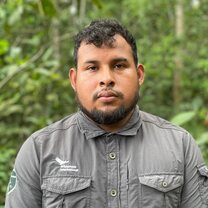
Rainer Kant
Senior Officer for Biodiversity and Ecosystems at BAUM e.V.
“Wilderness International pursues a comprehensive approach to protecting primary rainforests — one characterized by integration, systems thinking, multidimensionality, interdisciplinarity, and a holistic perspective.”
“Ancient forests are ourmost important buffer againsthuman-induced climate change.Protecting them is a top priorityif we want to save the planet.”
How we protect wilderness.Our guide to saving the world.
1
Find land plot
In so-called rapid assessments we determine the conservation value of a forest area together with researchers. The key criteria are whether the area has high biodiversity and CO₂ storage capacity, whether it is threatened and whether it is in a strategically important location.
2
Purchase in advance
The purchase of the land is financed with loans. We do not collect donations for a piece of land that we do not yet own.
3
Receive land title
We work in countries with a high degree of legal security and only purchase land with clear and secure title. All three foundations are entered on title in the land register.
4
Create georeferenced aerial images
Using drones, we create high-quality aerial panoramas of our land parcels. These are uploaded to our website. Every square metre is assigned specific geo-coordinates.
5
Refinance through donations
Anyone can donate for a very specific piece of this wilderness area. The donation refinances the purchase and secures long-term protection. Each square metre is allocated only once.
6
Show geo-coordinates with a certificate
Donors receive a personalized certificate with the exact geo-coordinates of the forest area they have helped to protect. This makes protection tangible and directly traceable.
7
Research, document, communicate
Environmental ambassadors and researchers visit the areas, conduct research together and experience the forest they protect. They then use the research findings, photos and videos for environmental education at schools and to inspire people about wilderness.
8
Ensure long-term protection
Regular visits, local partnerships, forest guardians, payment of property taxes and the foundation concept ensure the long-term protection and ecological integrity of the areas.
As of 01 Jan 2026
Our protected areas.
Secret Forest
Madre de Dios · Peru
0m²
Misty & Grizzly Forest
West Coast · Canada
0m²
Total protected
Peru & Canada
0 m²
Overview of our protected areas.
Misty Forest, Canada
0 m² old-growth forest
Grizzly Forest, Canada
0 m² old-growth forest
Secret Forest, Peru
0 m² old-growth forest
*As of 01 Jan 2026
Overview: Our Projects
2007 to 2017
Protection of the Peel River Watershed with the Gwich’in · Canada
2008 to present
Research projects and expeditions
Collaboration with First Nations / local communities
At least 731 scientifically documented vertebrate species inhabit our Peruvian protected areas:
0bird species
0bat species
0herpetofauna species (amphibians and reptiles)
0large mammal species
For comparison
In Germany there are only 21 amphibian, 15 reptile and 25 bat species.
This is due to various reasons, from different climatic and geological conditions to human influence.
Canada
In our protected areas in Canada we have documented 214 species so far:
0bird species
0insect species (with eDNA)
0mammal speciesof which 0 bat species
0Herpetofauna species (amphibians and reptiles)
0marine invertebrates (with eDNA)
Guardians of the Forest
In Peru we maintain a presence in our forest areas and stay in contact with the local population. Local forest guardians carry out this task.
0research and environmental ambassador expeditions
0scientific projects & publications
0research station in Peru
> 0researchers year-round in the protected area
from early 2008 to end of 2025
Environmental education projects in Peru
The program imparts knowledge and enthusiasm for the rainforest and gives people in Madre de Dios the tools to actively protect this fragile ecosystem.
0people directly reached by the programme
0educational events in local communities
0school visits in the Secret Forest
from August 2024 to end of 2025
Our Agroforestry Project
Together with local partners we train farmers in sustainable cultivation practices, create sources of income and thereby preserve old-growth forests in the long term.
0,0 hafallow land converted to agroforestry area
0seedlings planted
0native species per plot
from early 2024 to end of 2025
Purchased land area in Canada (since 2008) and Peru (since 2019)
The 2.8 % of intact land surface is based on a study by Plumptre et al. (2021), which identifies areas with minimal human impact and fully intact fauna. Due to its global approach, it excludes areas smaller than 10,000 km². Our protected areas therefore do not fall under these definitions. Nevertheless, we use the figure because it conveys a clear and memorable message about the urgency of conservation. It should be noted, however, that we do not aim to preserve the 2.8 % of wilderness identified in this study, but wilderness areas in the broader sense.
How exactly we define wilderness can be seen on page 20. We are currently still working on an overview of which areas fall under these wilderness criteria. Until then, we use the best available data and remain transparent about our conservation strategy.